 What online hypnotherapy for anxiety actually is
 What online hypnotherapy for anxiety actually is
Hypnotherapy is a guided process that helps you enter a calm, focused state where the mind is more receptive to change. You are not unconscious. You are not under someone else's control. You are aware, and in many cases more aware than usual, because you are no longer split in ten directions.
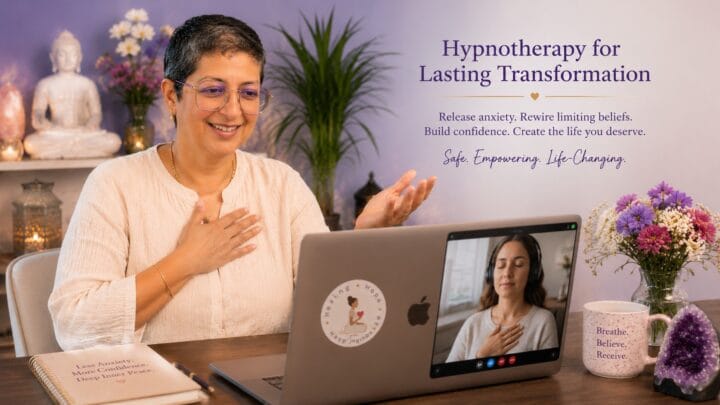
In an online session, that process happens through video. You are guided to relax, focus inward, and work with the thoughts, emotions, and beliefs feeding the anxiety. The setting is different from an office, but the core work is the same. In some cases, being at home actually helps people settle faster because they are in a familiar environment.
The real point is not to "zone out." The point is to interrupt the automatic stress cycle and create a different internal response. That may include reducing physical tension, softening fear-based thought patterns, addressing old emotional imprints, or strengthening a sense of safety and control.
Why does anxiety respond to subconscious work?
Anxiety often has layers. There is the current stressor - work, money, relationships, health, and uncertainty. Then there is the deeper meaning your system attaches to that stressor. Maybe your body learned that conflict is dangerous. Maybe uncertainty feels unbearable because your life has trained you to expect the worst. Maybe your self-worth is so tied to performance that any mistake feels like a threat.
Talk can help you understand those layers. Hypnotherapy can help shift them.
That matters because anxious patterns are rarely changed by logic alone. You can tell yourself you are safe and still feel your heart race. You can know you are capable and still freeze. The subconscious mind holds the emotional programming. When you work there, change can feel less like forcing yourself and more like finally getting the root unstuck.
This is also why a spiritual and practical approach can be so effective. Some people need more than symptom management. They need to release old emotional weight, rebuild trust in themselves, and stop organizing their life around fear. Real healing asks for honesty, but it also asks for action.
What happens in an online session
A good online hypnotherapy session for anxiety is not a one-size-fits-all script. It should be shaped around your patterns, triggers, and goals. Some people come in with social anxiety. Others struggle with anticipatory anxiety, sleeplessness, fear of failure, or a constant sense of inner pressure.
A practitioner will usually begin by talking through what is happening, what you want to change, and what your anxiety tends to sound like in your head and feel like in your body. From there, the guided hypnosis portion begins. You are led into a relaxed, focused state, then guided through specific language and imagery designed to shift your internal response.
Depending on the style of work, a session may include calming the nervous system, reinforcing feelings of safety, addressing a root memory, changing a limiting belief, or mentally rehearsing a new response to a trigger. Some practitioners also blend hypnotherapy with guided meditation, energy work, or coaching support so the emotional shift has somewhere to land in daily life.
That last part matters. Insight without follow-through can leave people inspired for a day and stuck again by Friday.
The benefits - and the limits
Online hypnotherapy for anxiety can help you feel calmer, sleep better, reduce racing thoughts, and respond less reactively to triggers. It can also improve confidence because you stop feeling at war with your own mind. For people who have tried to think their way out of anxiety and gotten nowhere, that can be a genuine relief.
It also offers practical advantages. You can work from home, skip the drive, and build support into your schedule more easily. That makes consistency more realistic, especially for busy professionals, parents, or anyone already stretched thin.
But let us be honest about the trade-offs. Online work still requires privacy, a stable internet connection, and a willingness to be present. If your home is chaotic or you do not have a quiet place to settle, the session can feel harder. Some people also need a few sessions before they stop overanalyzing the process and allow themselves to go deeper.
And hypnotherapy is not a cure-all. If someone is in acute crisis, dealing with severe, untreated trauma, or expecting one session to erase years of conditioning, expectations need to be reset. Good work is powerful, but it is still work.
Who tends to benefit most?
People often get the best results when they are ready for change, not just relief. There is a difference. Relief says, "Make this feeling go away." Change says, "I am willing to look at what keeps feeding this and build a new pattern."
That is why online hypnotherapy can be especially helpful for people who are self-aware but still stuck. They have read the books. They know their patterns. They may even function well on the outside. But inside, they are exhausted from carrying hypervigilance, self-doubt, or emotional tension that never fully turns off.
It can also be a strong fit for people who want an approach that respects both inner healing and personal responsibility. If you want someone to simply soothe you every week without asking you to change your habits, choices, or boundaries, this may not be the right lane. But if you want support that helps you heal and move, it can be deeply effective.
How to know if a practitioner is the right fit
Not every hypnotherapist works the same way, and that matters. Anxiety is vulnerable territory. You want someone who knows how to create safety, but also knows how to guide transformation instead of keeping you dependent on sessions.
Look at how they talk about anxiety. Are they clear, grounded, and realistic? Do they explain the process in plain language? Do they have a structure for helping clients integrate changes outside the session? That matters more than polished spiritual language or empty promises.
If a practitioner blends hypnotherapy with coaching, EFT tapping, Reiki, meditation, or regression work, ask how those tools are used. The right combination can be powerful, especially for clients dealing with layered emotional blocks. But the method should serve your healing, not overwhelm it.
This is where my approach speaks to many people who are tired of surface-level support. The work is not about bypassing pain or endlessly talking in circles. It is about healing what is real, taking responsibility for your growth, and using practical steps to create measurable change.
Getting better results from online hypnotherapy for anxiety
The session matters, but so does what you do before and after it. Show up rested if you can. Give yourself ten quiet minutes beforehand instead of rushing in from an argument, a meeting, or social media overload. Afterward, do not immediately flood your system again. Let the work settle.
It also helps to track what changes. Notice your sleep, your body tension, your thought speed, and how quickly you recover from triggers. Small shifts count. Anxiety often loses power gradually, then all at once, you realize you handled something differently.
And be willing to support the deeper work with real-life choices. If your anxiety is being fueled by toxic dynamics, constant overcommitting, poor boundaries, or zero nervous system care, hypnotherapy should not be expected to carry the whole load by itself. Healing asks you to participate.
If you have been living in survival mode for a long time, calm can feel unfamiliar at first. Stay with it anyway. Sometimes, the next level of healing is not learning how to manage more anxiety. It is deciding you are done organizing your life around it.
I'd Love to Hear From You
How are you handling it if you feel anxious?
What practices, insights, or lessons have helped you most?
Feel free to share your thoughts by sending me a message. Your story may be exactly what someone else needs to hear today.
Ready for a Different Experience?
If you feel stuck in old patterns and are ready to create greater confidence, clarity, and peace, I invite you to schedule a complimentary Clarity Call.
Together we'll explore what's keeping you stuck, identify your next best step, and determine whether working together is the right fit.
Stay Connected
For guided meditations, emotional wellness tools, spiritual insights, and practical strategies for living a more purposeful life, subscribe to my YouTube channel and join our growing community.
Support This Work
If you found this article helpful and would like to support the creation of free resources, articles, videos, and meditations, donations are always appreciated.
Every share, subscription, and contribution helps bring healing, hope, and encouragement to those who need it most.
With deep gratitude and much love,

The Urban Shaman

